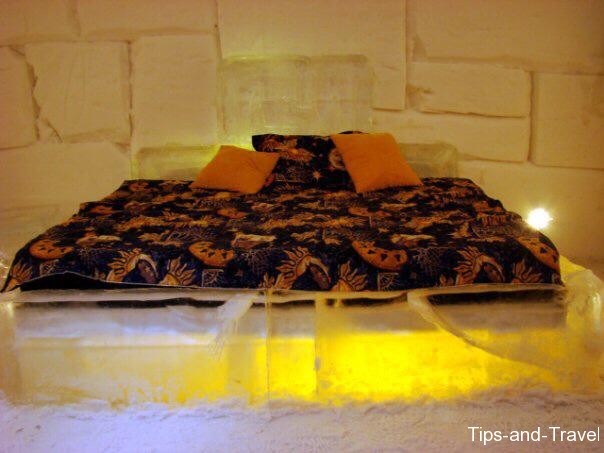
Ice Hotel, Saint-Gabriel-de-Valcartier, Quebec, Canada

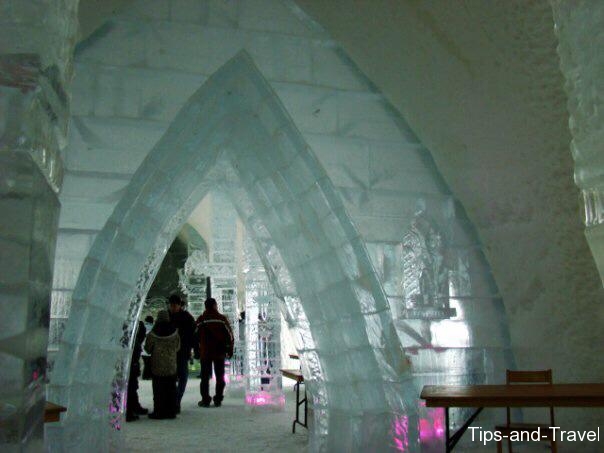
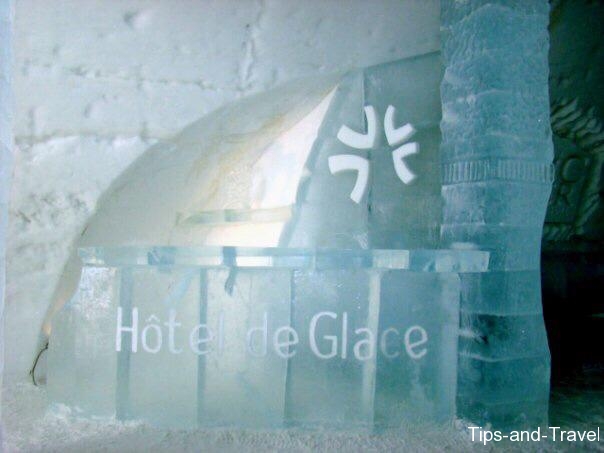
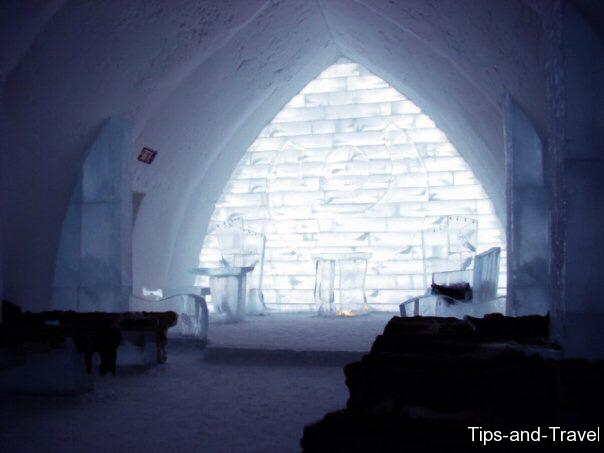
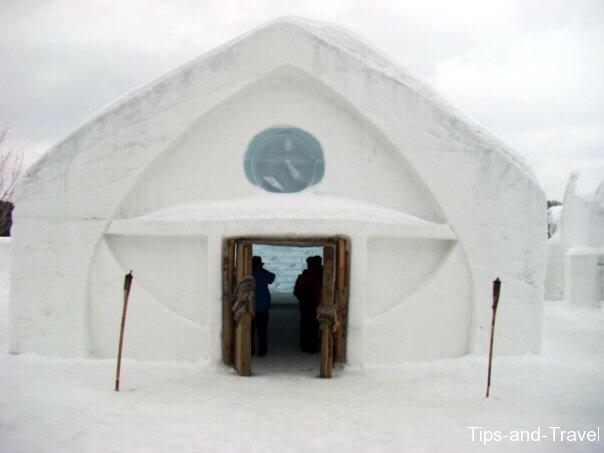
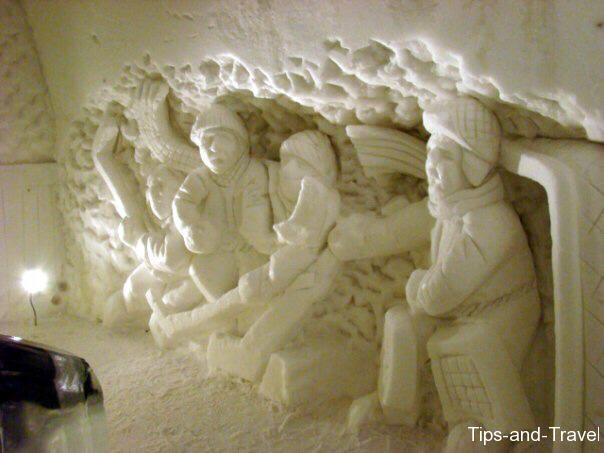
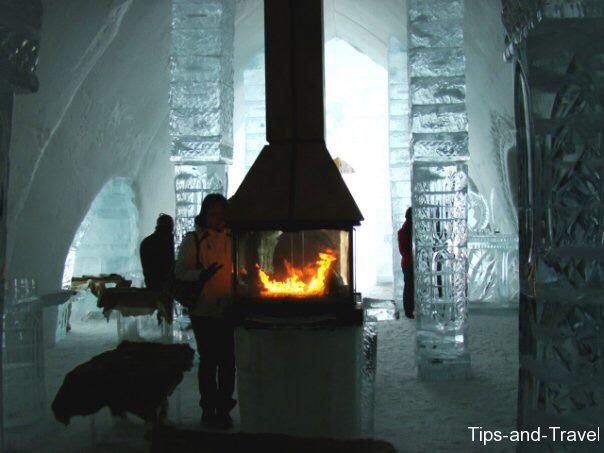
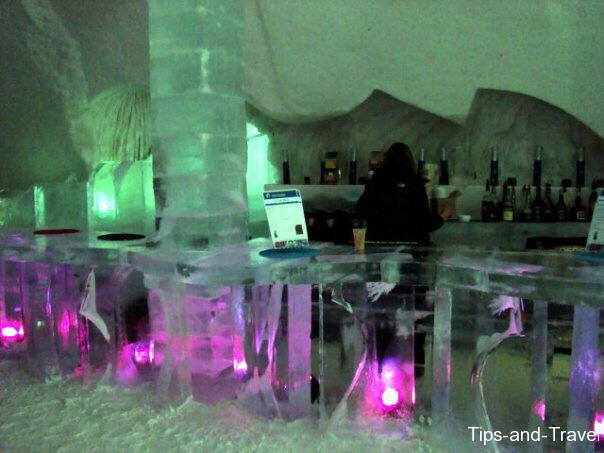
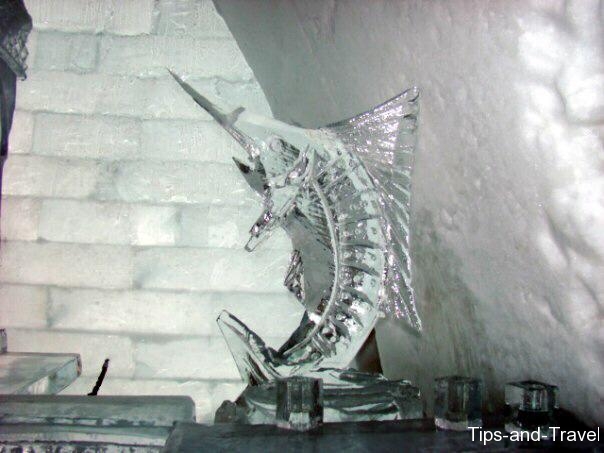
The Ice Hotel is located for the 1st time on the site of Village Vacances Valcartier in St-Gabriel-de-Valcartier, north of Quebec City, in the Province of Quebec, Canada. It is designed each year entirely in ice and snow with beautiful scenery. There are themed rooms and suites with beautiful sculptures. It is a unique concept hotel where you can spend a magical night and enjoy a cocktail in one of its famous ice glasses. This is a non-smoking hotel with an inside fireplace, a reception room, meeting, conference, a common lounge, sauna and indoor spa with free outdoor parking.

Tips

To get there, you have a shuttle service from Quebec City. Take it at the Place d’Armes. You will get a discount if you buy your ticket at the same time as the entrance to visit the hotel. You must buy it online on the Old Quebec Tours site.

If you go with your family, there is a family pass (2 adults, 3 children). There is also a discount for age 55 and over and children under one meter  enter without paying.

There are also  interesting packages: visit with a guided tour or not, guided tour with a cocktail or visit ‘Backstage’ in which in addition to the guided tour you will discover the secrets and procedures for the construction and maintenance of the hotel, visit the workshop where you can make your ice glass with which you will end the visit to the hotel bar drinking a cocktail served in your own glass.
 

Parish church of Our Lady of the Assumption, Valdemoro, Madrid

The parish church of Our Lady of the Assumption is located in Valdemoro, Madrid. It is Baroque and was built in the second half of the seventeenth century on the remains of former buildings and is considered the most important monument of the complex of buildings of the municipality. It has a central nave of 60 m long and 28 m wide, with eight side chapels on each side. There are three entrances, one located west of the nave, with three arches and two square towers. The tower was completed in 1764 and its bell tower has four bronze bells; its pink color is due to the recent reform that was made. The exterior walls are made of brick and stone. In the main altar there is a painting by Francisco de Goya: the Apparition of the Virgin to St-Julien, bishop of Cuenca, with two other paintings, The Assumption by Francisco Bayeu and St. Peter Martyr by Ramon Bayeu. We also find two other paintings by Claudio Coello and several frescoes by Antonio Van Pere. The parish has an important archive with documents dating from the fifteenth century. The organ is from 1737.

Tips

 
The parish functions as such and the calendar of the masses are available on its website.

Invalid Displayed Gallery

Basilica of the Nativity, Bethlehem, West Bank, Palestine

The Basilica of the Nativity in Bethlehem, West Bank, Palestine, built in the fourth century (327-333) by the Roman Emperor Constantine 1st, is one of the oldest churches in the world, built on the presumed site of the birth of Jesus of Nazareth. The current basilica was rebuilt in its present form in 565 by Emperor Justinian who erected a larger building by extending the nave and adding transepts. It suffered several conservation issues and changes through the years and also many restorations but its current state needs immediate handling and catering. Currently, it is administered jointly by the Orthodox Church of Jerusalem (which has the main part of the basilica and also the altar of the Nativity in the cave), the Catholic Church and the Armenian Apostolic Church (who owns the silver star beneath the altar of the Nativity). The fanatical rivalry on the spatial and temporal control of the sanctuary because of the conflicts erupt in the most serious solemn ceremonies involving the simultaneous participation of several churches. In the Place of the Nativity, you find the bell tower of the Armenian monastery in the foreground and the bell tower of the Greek Orthodox monastery in the background. The basilica is part of a large monumental complex that covers almost 12,000 square feet which includes the Latin monasteries (north), Greek Orthodox (southeast, the cemetery along the south aisle of the basilica), Armenian (south- west) and St. Catherine of Alexandria Catholic church with chapels and hotels nearby to accommodate the pilgrims. The current basilica architectural ensemble is a combination of two churches and a crypt – the grotto of the Nativity – where Jesus was born, according to tradition. It includes just a gateway, the Door of Humility, which originally was much larger but it has been reduced along the years. The key to the door is in the hands of the Orthodox that open at dawn and close twenty minutes before sunset. The church plan is that of a classical Roman basilica. Inside there are pink limestone of Bethlehem, white marble, many frescoes, Byzantine mosaics, eternal hanging lamps, details that also show various different religions and cultures that have passed through the years. The stairs on either side of the sanctuary provide access to the Grotto by irregular steps.

 
Tips

Believers gather on Christmas Eve in Manger Square to sing Christmas carols until midnight mass but it takes place at different dates according to the beliefs.
In one of the columns inside, you’ll find four holes in a cross where visitors have the habit of placing their fingers because according to the belief, Mary laid her hand so the wishes from their prayers to the Virgin, could be realized.

Invalid Displayed Gallery