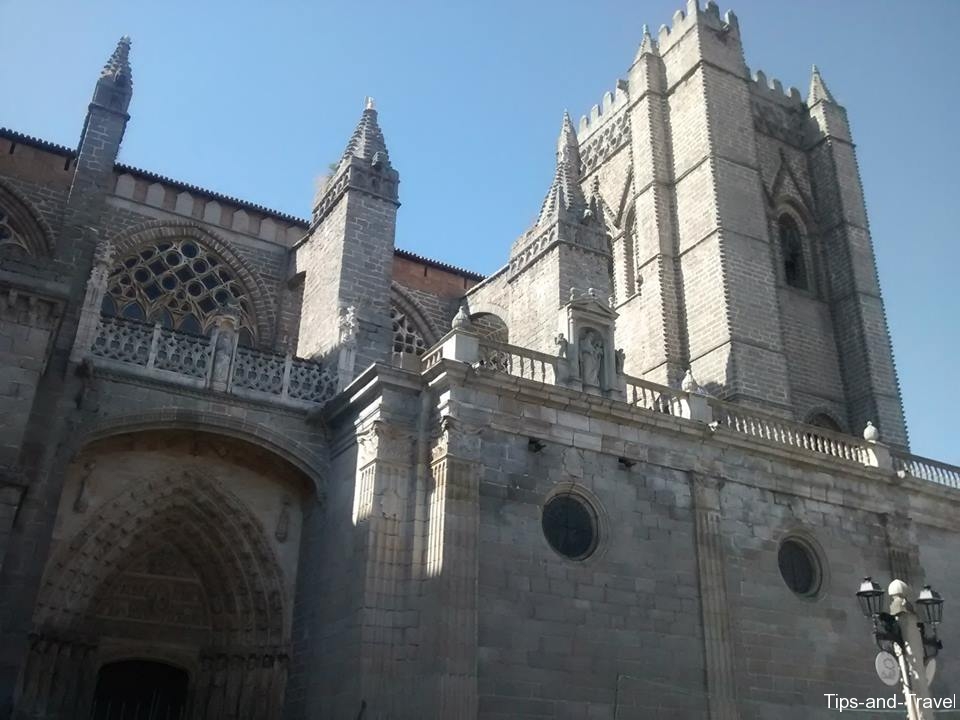
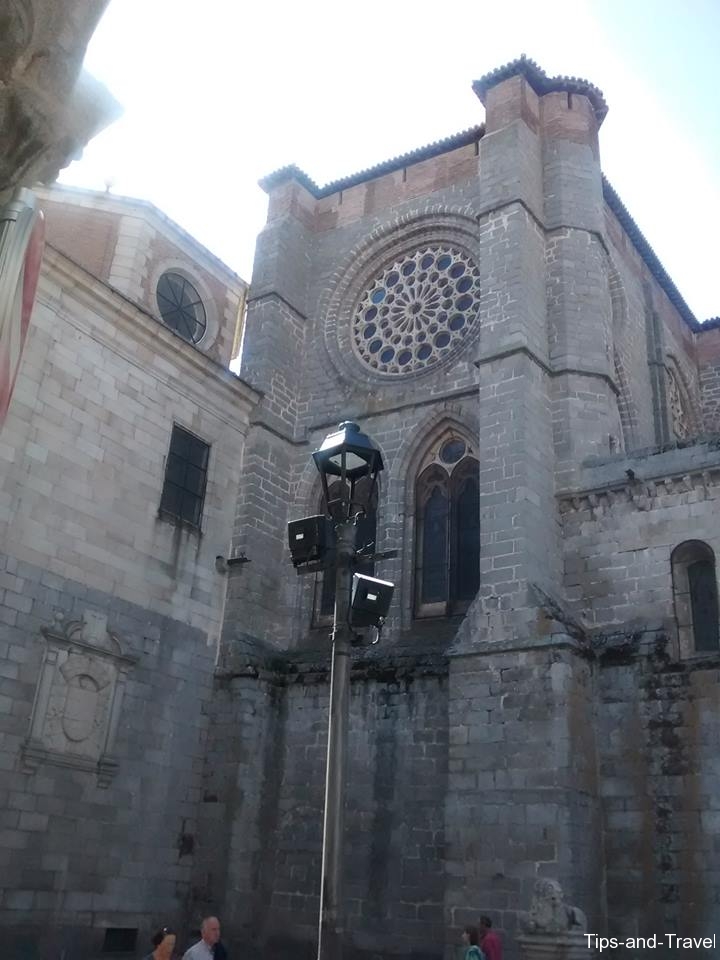
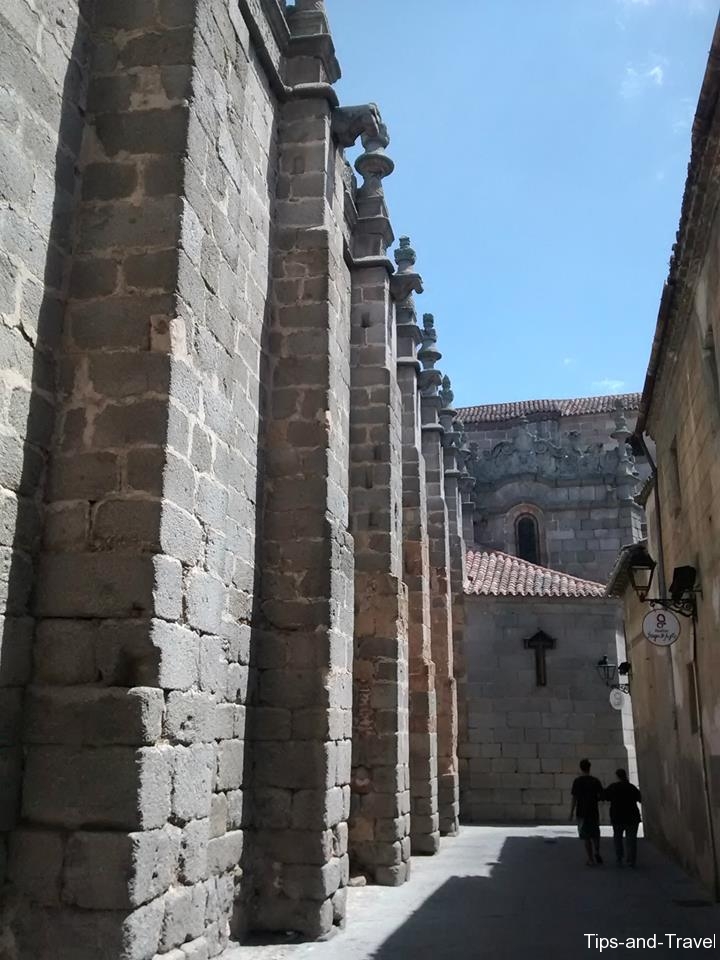
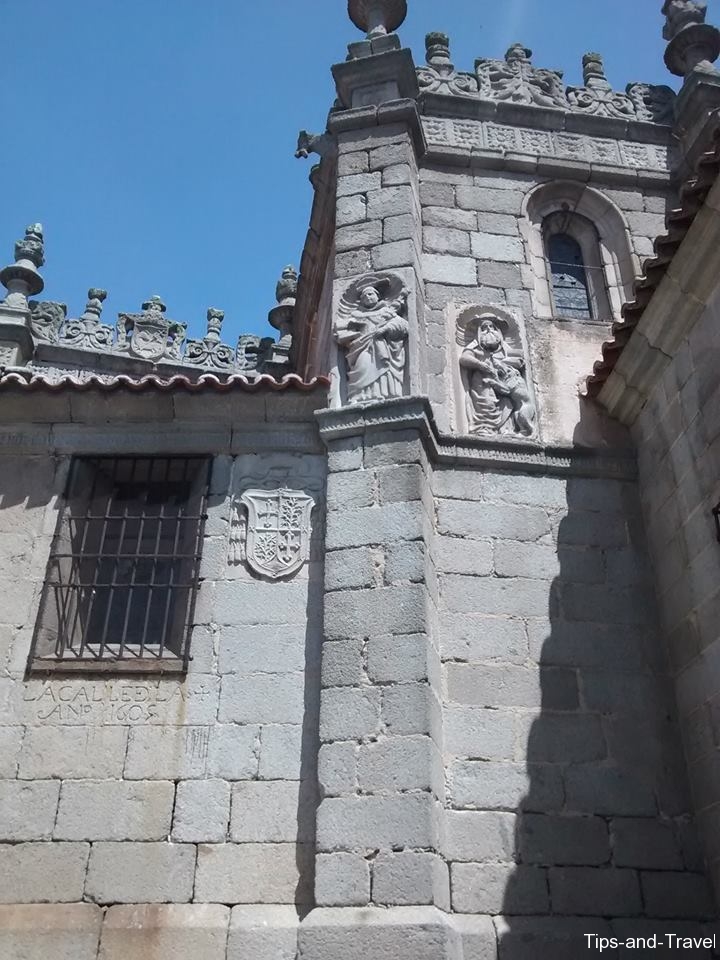
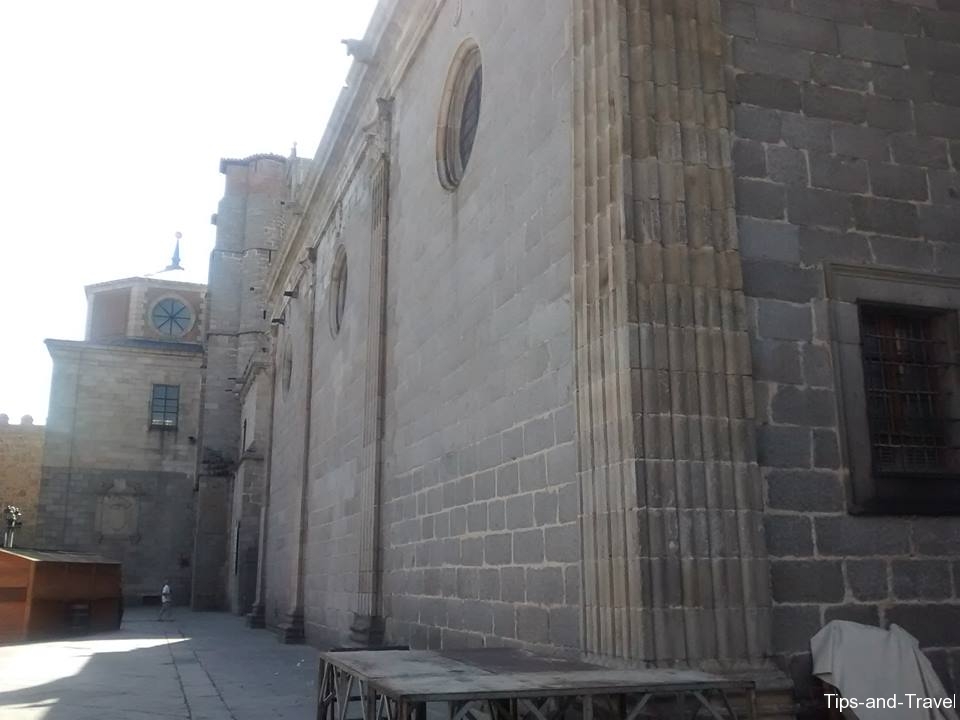
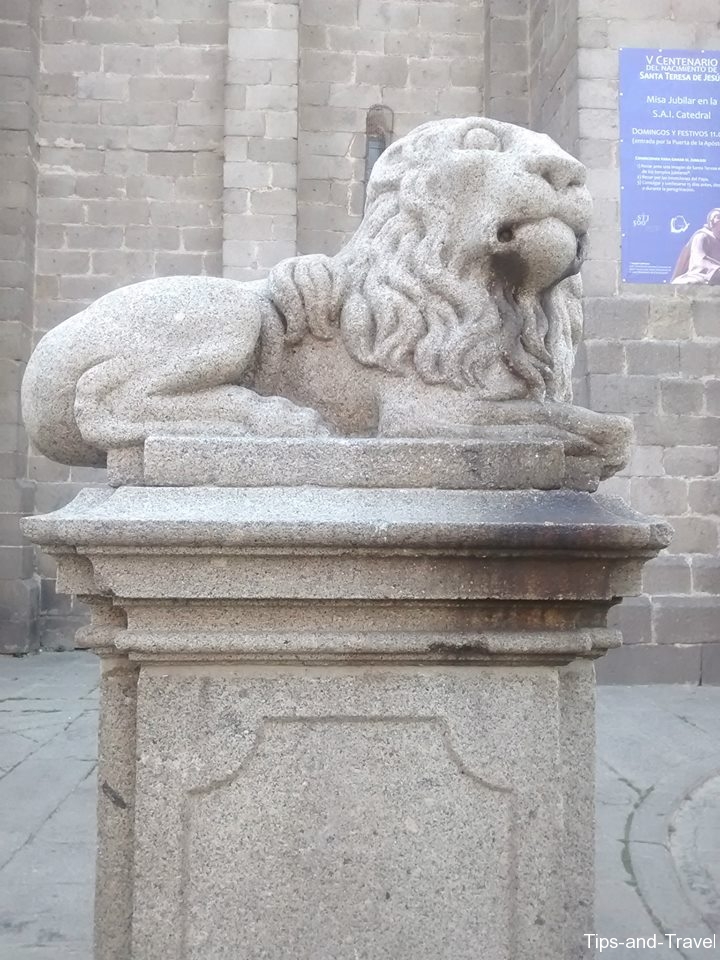
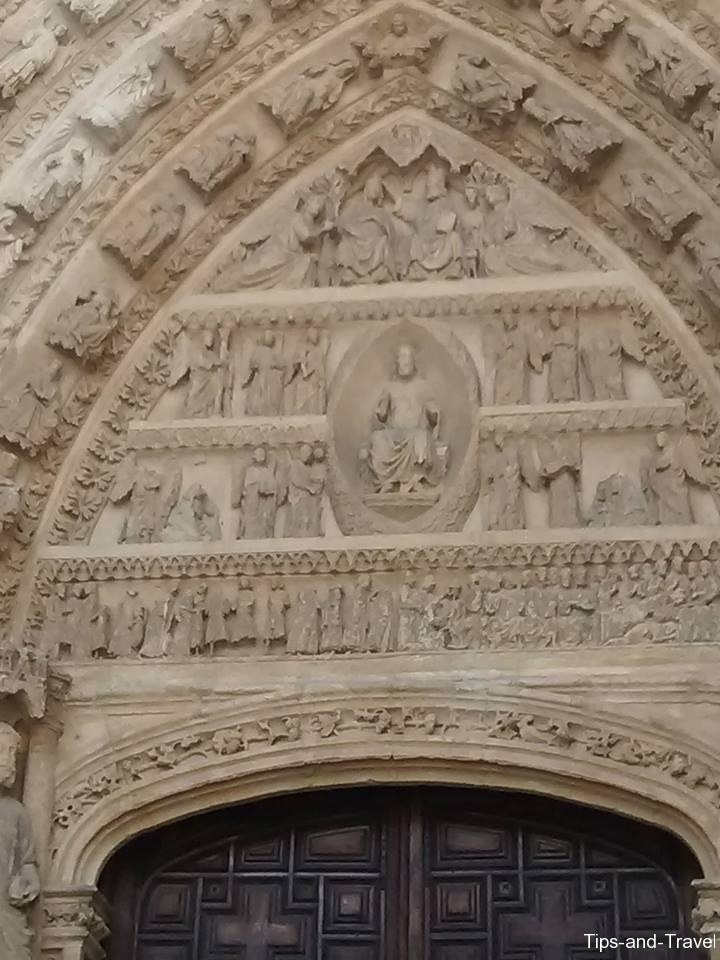
Cathedral of Christ the Savior, Avila, Castilla y León, Spain

The Cathedral of Christ the Savior in Avila, the first Gothic cathedral in Spain, is the bishopric of the same name, in Castilla y León. It was designed as a temple and fortress, its apse being one of the hubs of the city wall. It is located alongside several houses or majestic palaces which ensured the defense of the Loyal Door or the Weight of the Flour. It is not known with certainty the date on which it was built, but most historians say it was in the twelfth century with the completion in the XVI century, except for a tower that has not been completed. The back of the choir is limestone and it is very large. We find a French influence with a resemblance to the Basilica of Saint-Denis. Outside, it is fortified, but inside its double ambulatory with thin columns and arches give it an impression of lightness and clarity, also with a very good light. The three naves are of equal width, but the central one is significantly higher, and opens with large windows to the outside. There are the remains of the penultimate historian and prime minister of the Second Republic in exile, Claudio Sanchez Albornoz and those of the Spanish President Adolfo Suarez (1977-1981) and his wife.

Tips

The cathedral is open daily, but you should consult the daily schedule.
You have to pay an entrance fee for sightseeing, but children under 12 years old and people with disabilities do not pay.

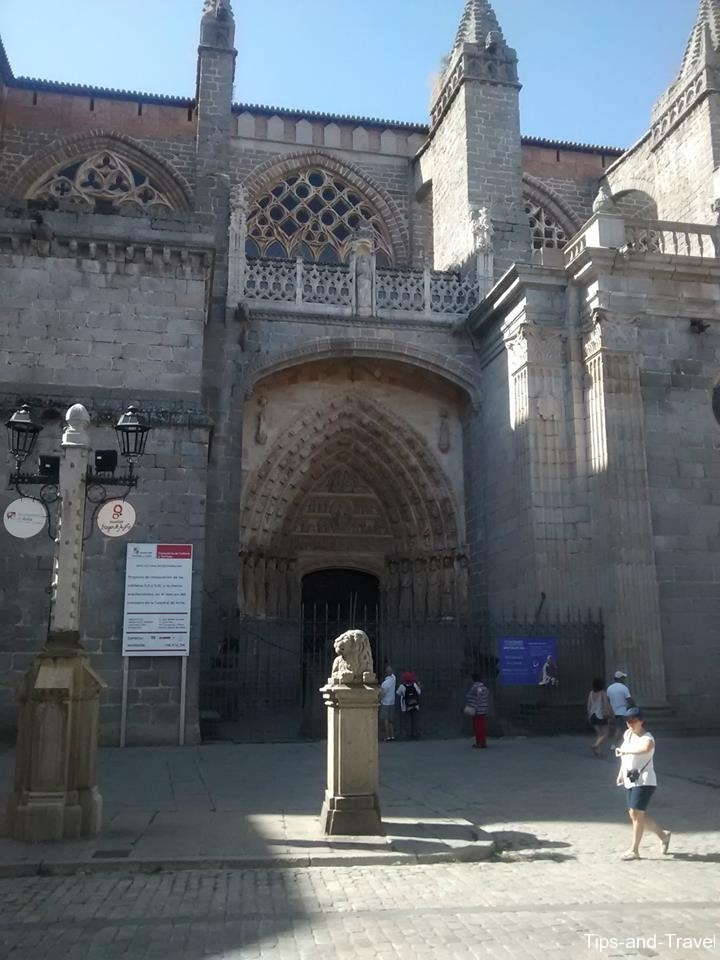
Wuzhen, China

Wuzhen is a small Chinese city on the Grand Canal, south of the mouth of the Yangtze River, near the city of Tongxiang (17 km), north of Zhejiang province; 80km from the city of Suzhou and Hangzhou, 140 kilometers from Shanghai. It is a one of the six largest old towns in southern China, a typical water town with a history of over 6000 years. The city is entirely built around canals. There are just over 60,000 inhabitants but only 12,000 are residents. The river binds all the streets together. Streams and streets are well connected, the houses are built on the banks of the river. The economy is mainly based on crafts, like weaving, wood carving or rice wine distillation. Tourism activity is recent, and visitors are still overwhelmingly Chinese. There are ancient stone bridges, stone paths and wood carvings.

Tips

You can visit the city by boat or by walking. Spring and autumn are the best seasons. It rains a lot in spring and in summer, the typhoon is common. During the day, early in the morning and evening are the best times to visit it.
You will find hostels accommodation, varied and special ones. In some places you can cook yourself, in others you can taste special family dishes.

Invalid Displayed Gallery

Bethlehem, West Bank, Palestine

Bethlehem is a town in West Bank, a region of Palestine, important religious centre, about 10 km south of Jerusalem, which has 30,000 inhabitants, mainly Muslim Palestinians. The city has a small community of Palestinian Christians, one of the oldest Christian communities in the world. For Jews, the name is Ephrata and is the place of birth and Coronation of the King of Israel David. Regarded by Christians as the birthplace of Jesus of Nazareth. It is a place of pilgrimage that generates an important economic activity in the Christmas period. The city is also the seat of a place holy to Judaism, Rachel’s Tomb, located at the entrance of the city. Since 1995, the city is under the administration of the Palestinian Authority. There is also the Church of the Nativity with his famous star and the cave of the milk. The Christian assertions are not corroborated by archaeological discoveries in Bethlehem where no trace of contemporary habitat of Jesus was last updated so far. Between 1992 and 2003, the Israeli archaeologist Aviram Oshri led rescue excavations in the homonymous village of Bethlehem in Galilee, 6 km west of Nazareth. It has been the remains of a Jewish occupation of Herodian time, those of a Christian Basilica and issued the hypothesis that the Galilean village of Bethlehem would be the true birthplace of Jesus.
The city is now partially surrounded by the Israeli barrier in the form of an 8-metre wall built by the Israeli authorities.
Bethlehem received in 2000 the visit of Pope John Paul II to commemorate the 2,000th anniversary of the birth of Christ.

Tips

You can go by bus from Jerusalem, at the Damascus Gate and it will leave you in front of the wall, at the Israeli checkpoint. You will need to submit your papers and get a permit from the authority to enter, after crossing the wall, you can take a shared taxi to the city. To return with the same bus, you will need to pass a control where you present your papers again.
Alternatively, you can take a taxi to Jerusalem. If the driver is Arabic, he may cross the wall, arrange a tour with a local guide and take you back to Jerusalem.
If you rent an Israeli car, it cannot penetrate in the territories.
A half-day visit to the Basilica of the Nativity and the old town is needed.

Invalid Displayed Gallery