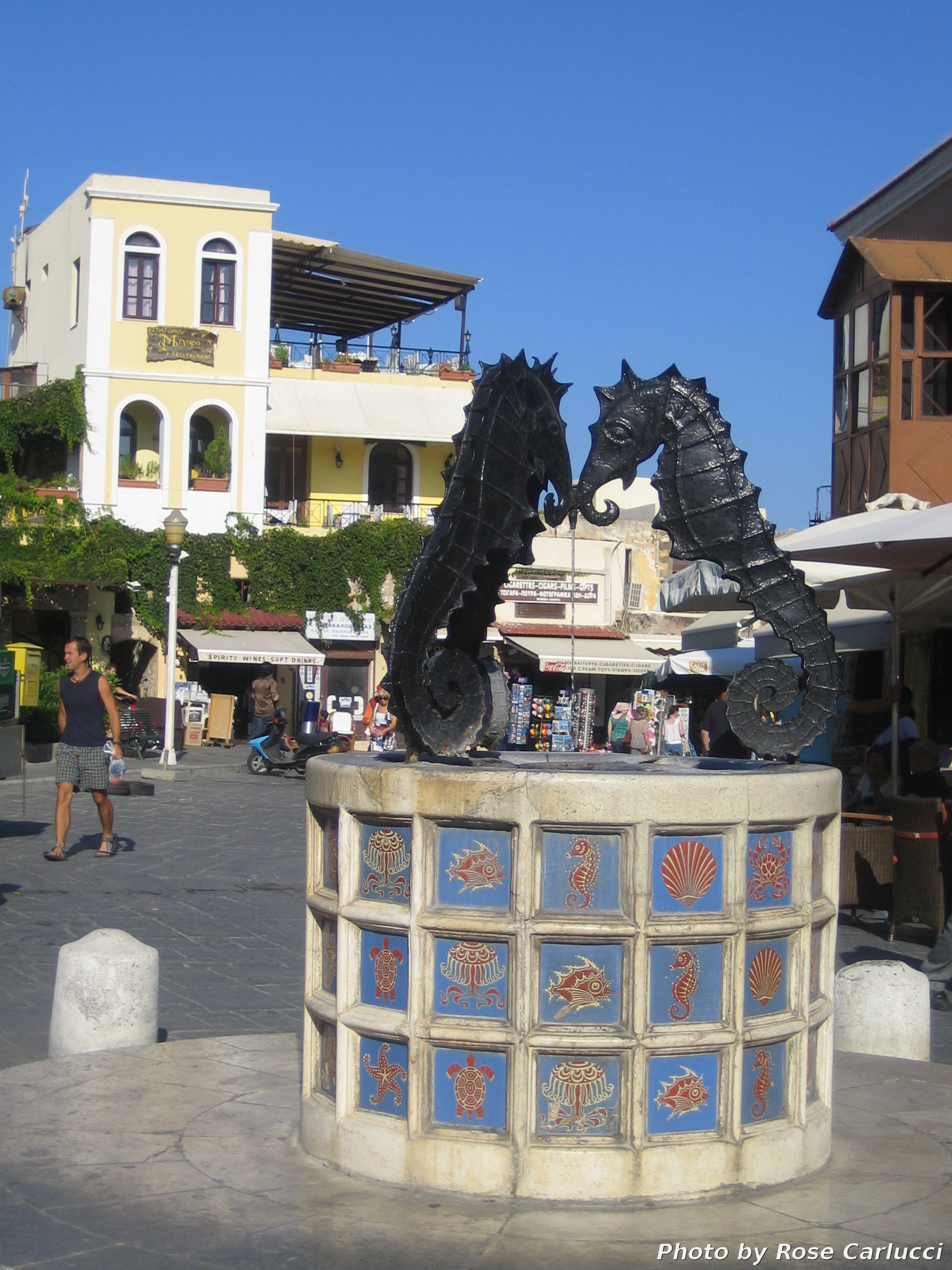
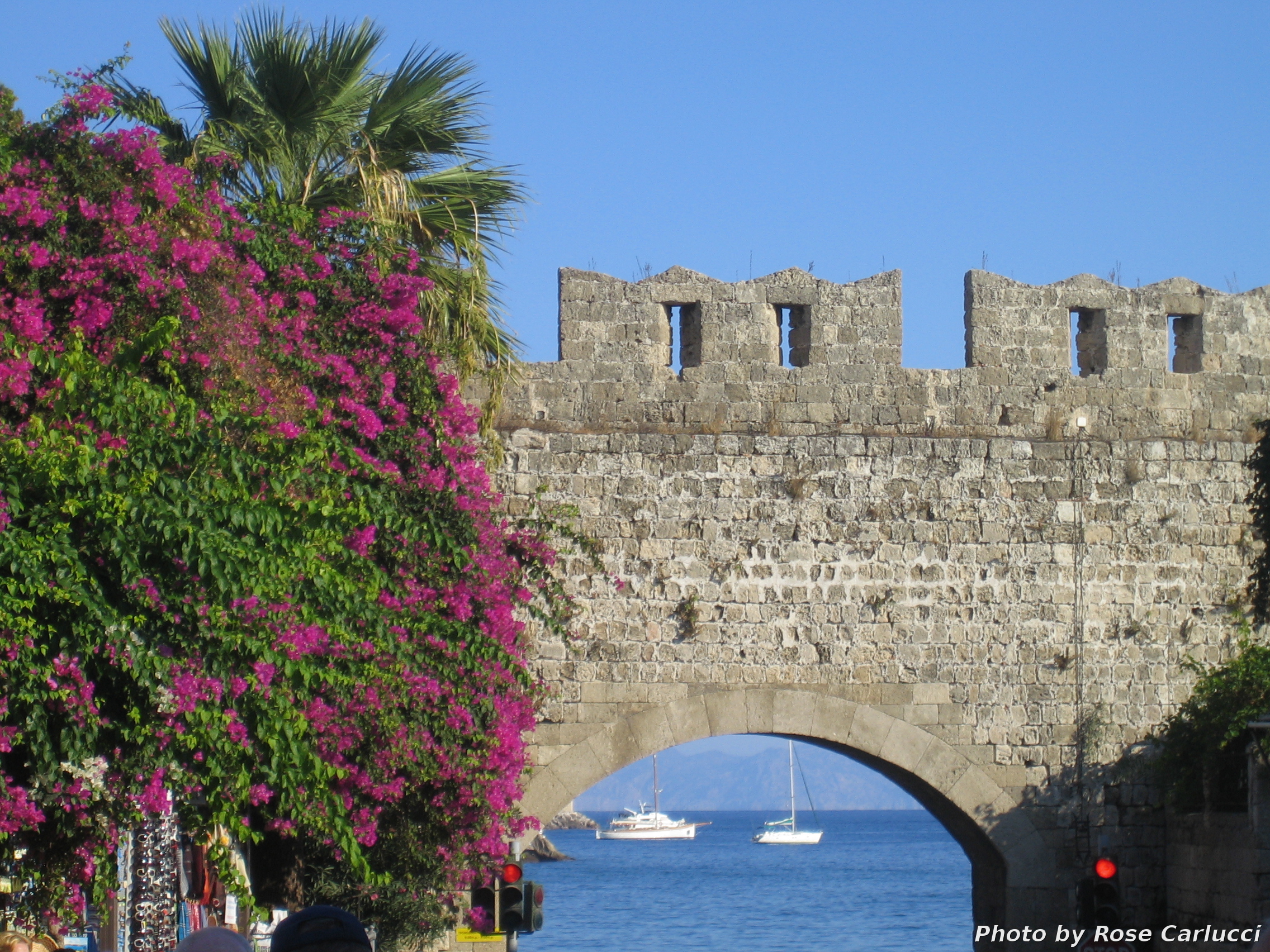
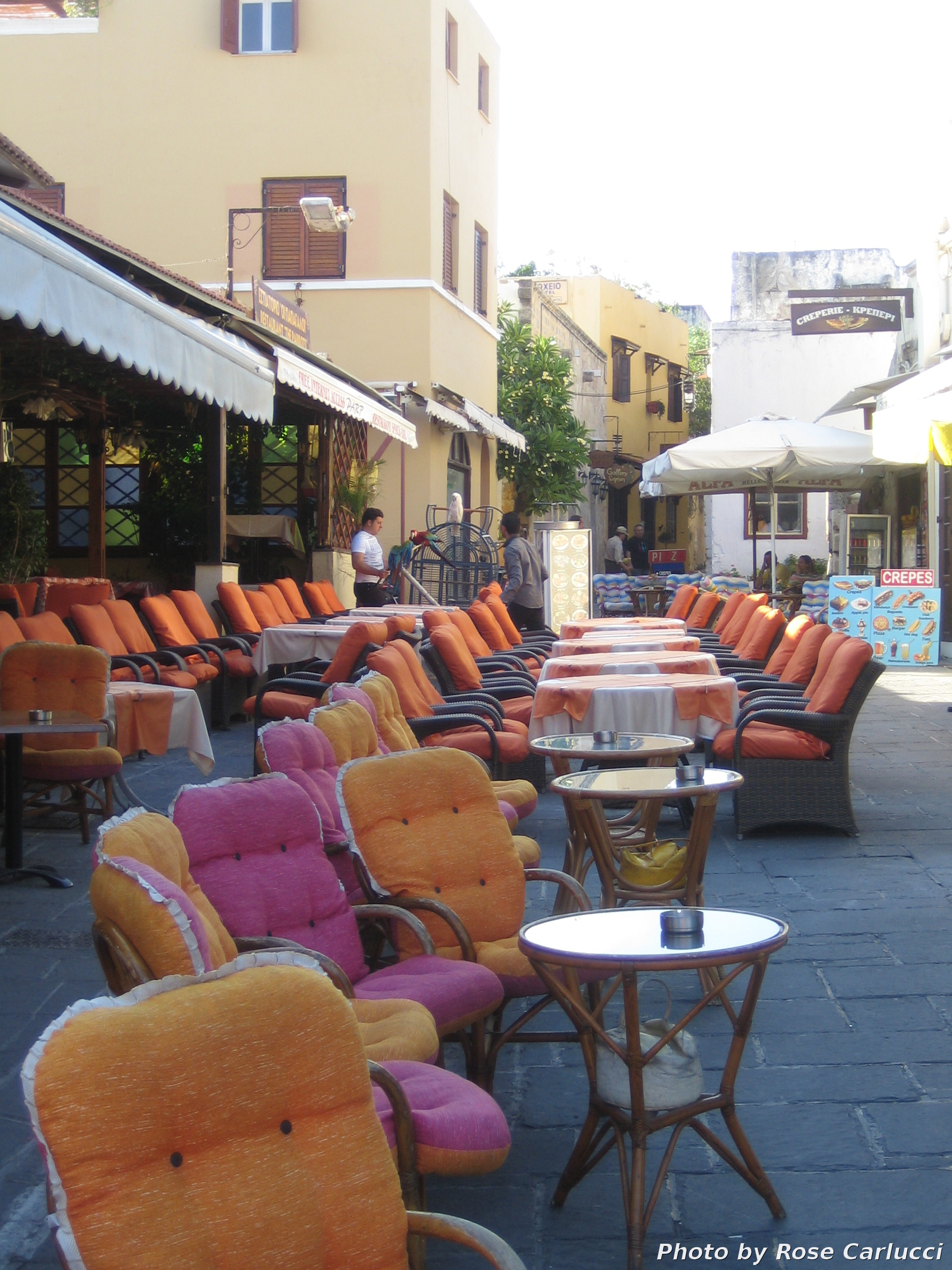
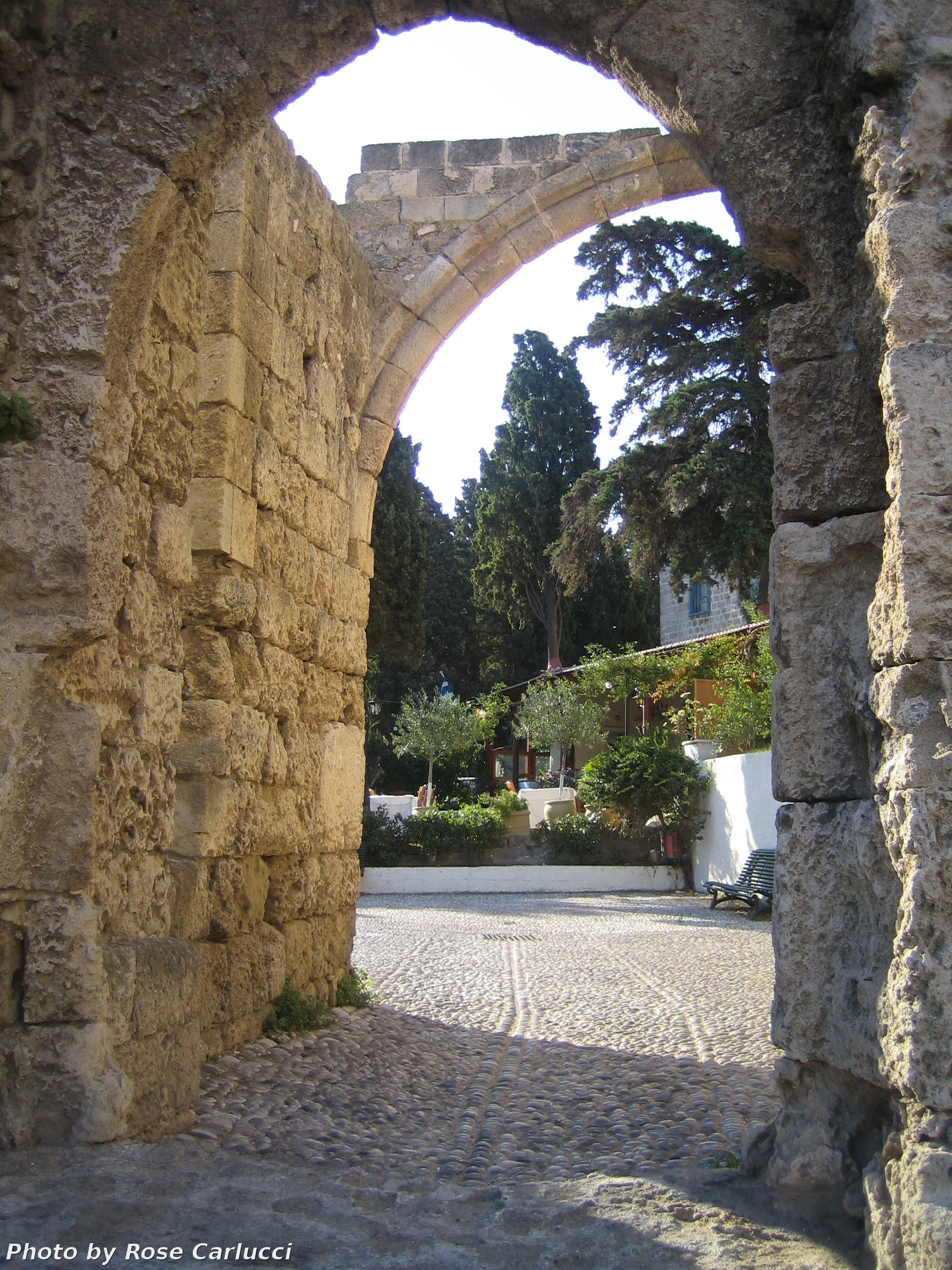
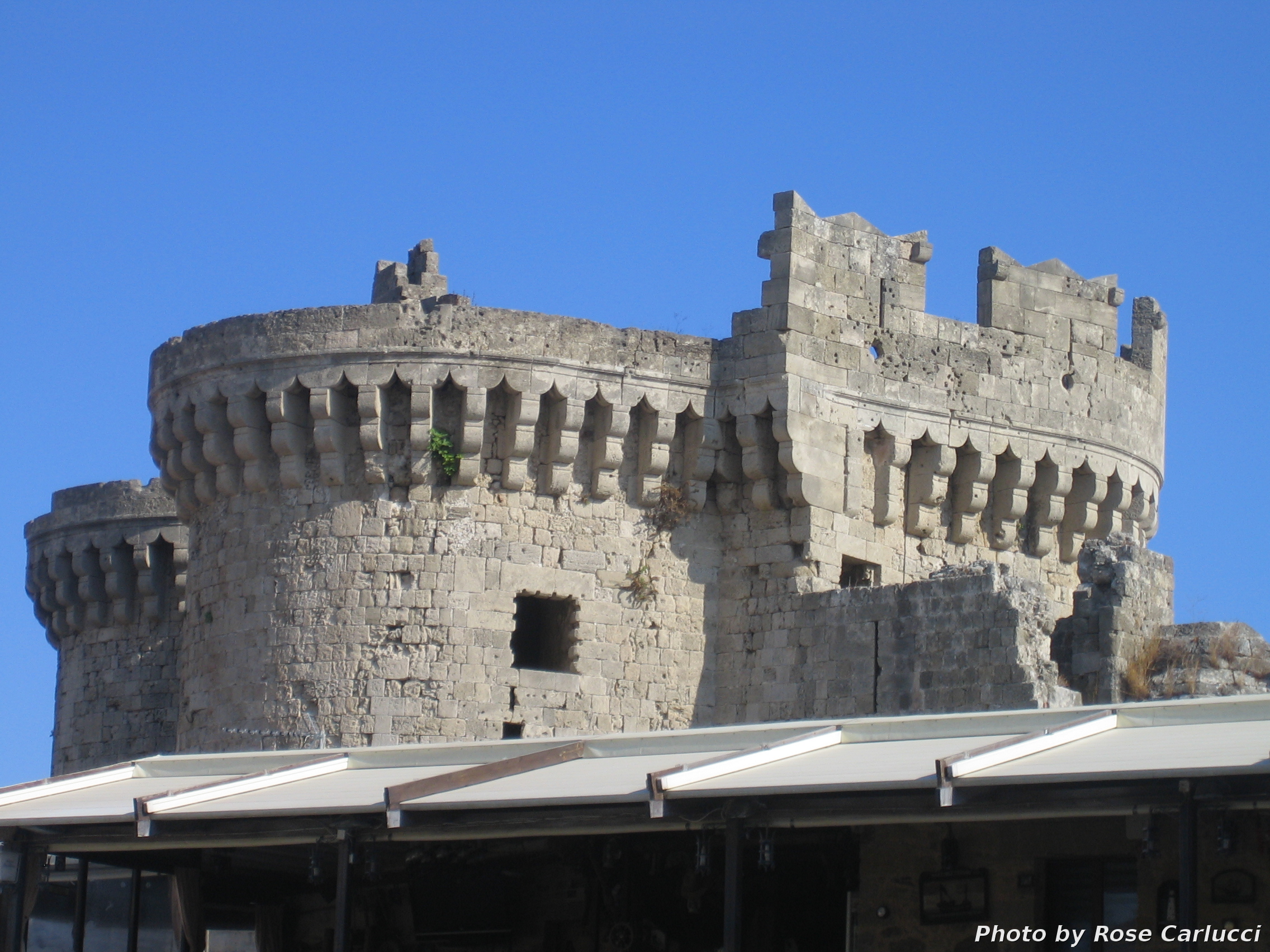
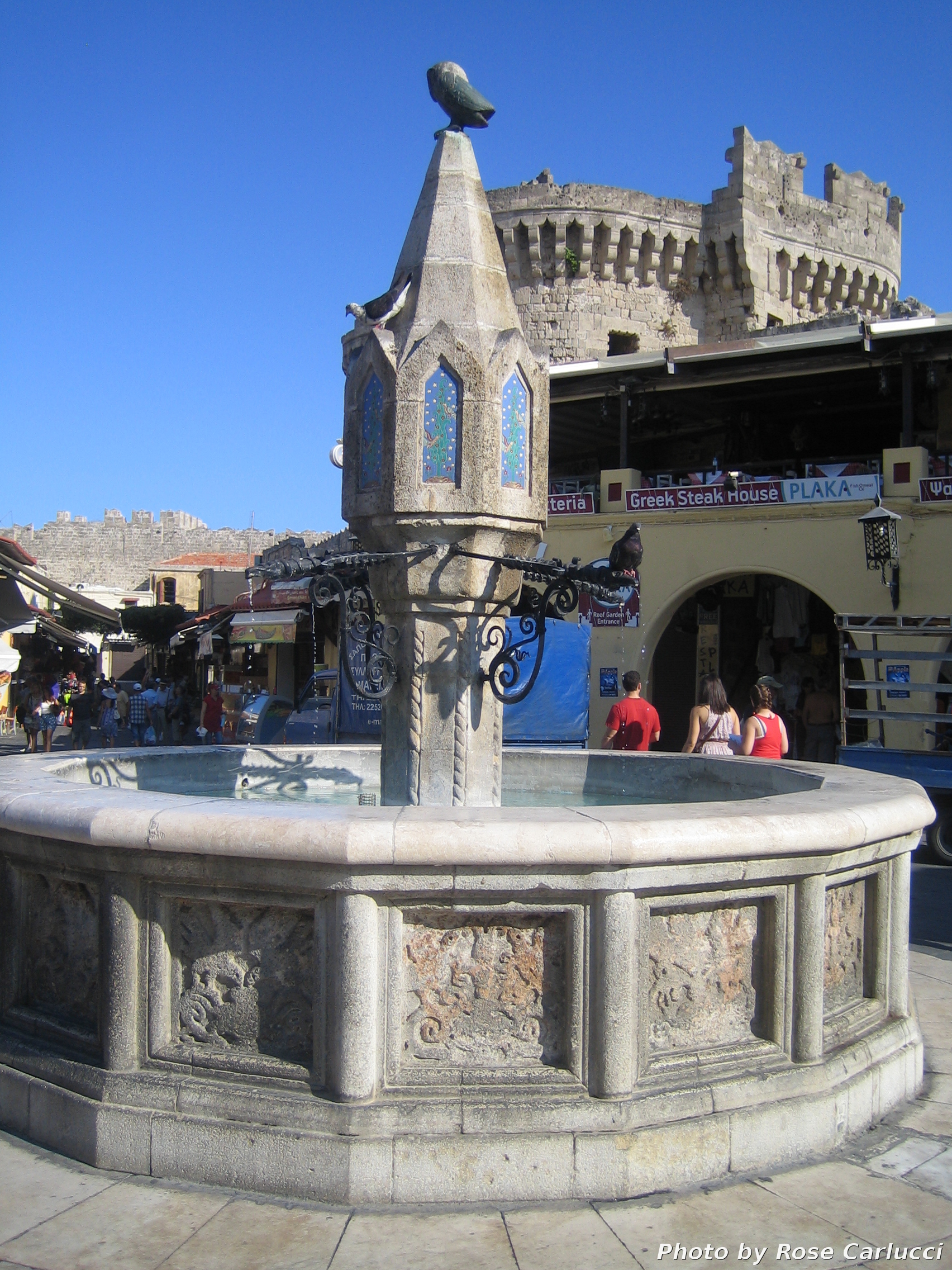
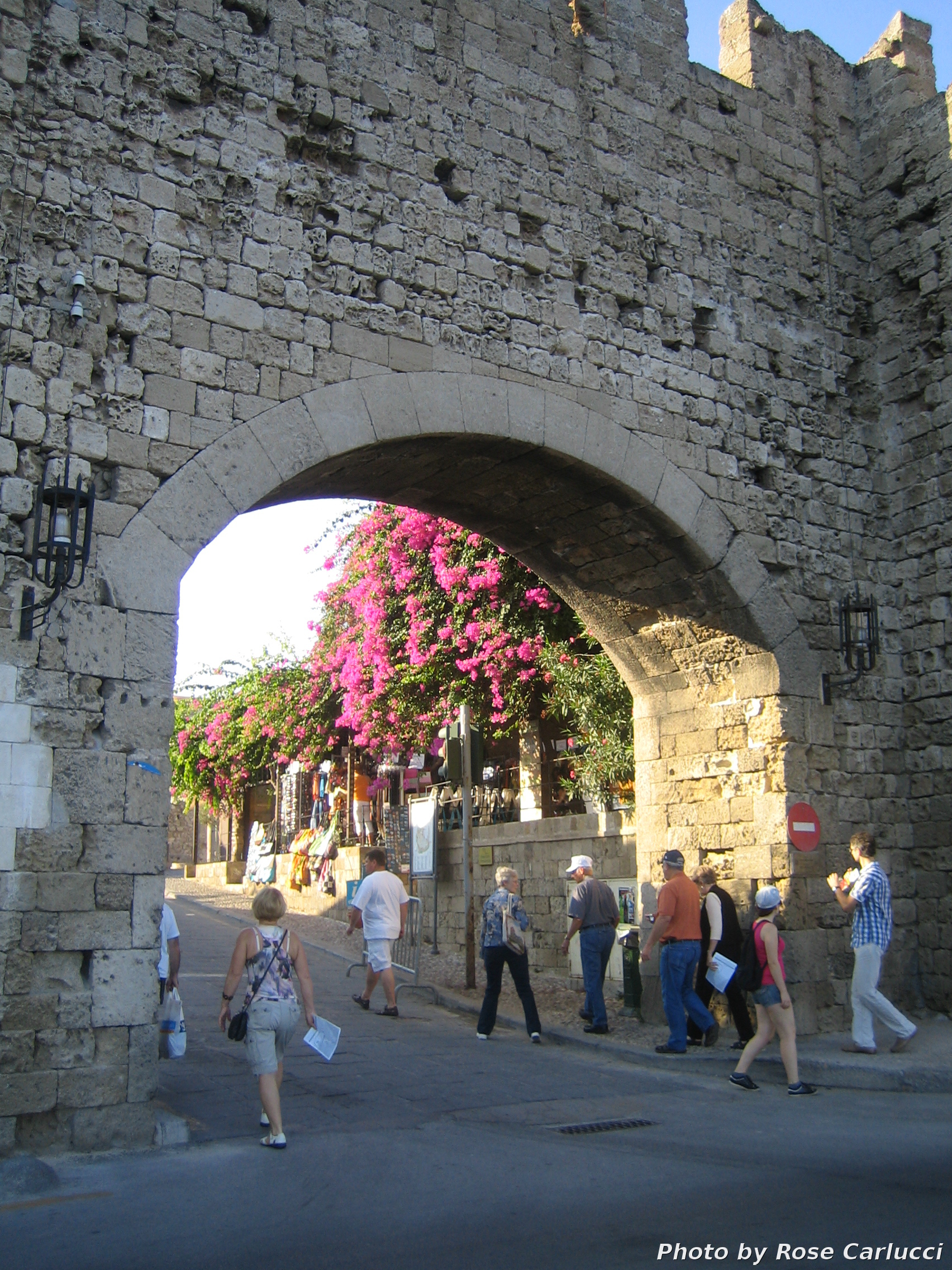
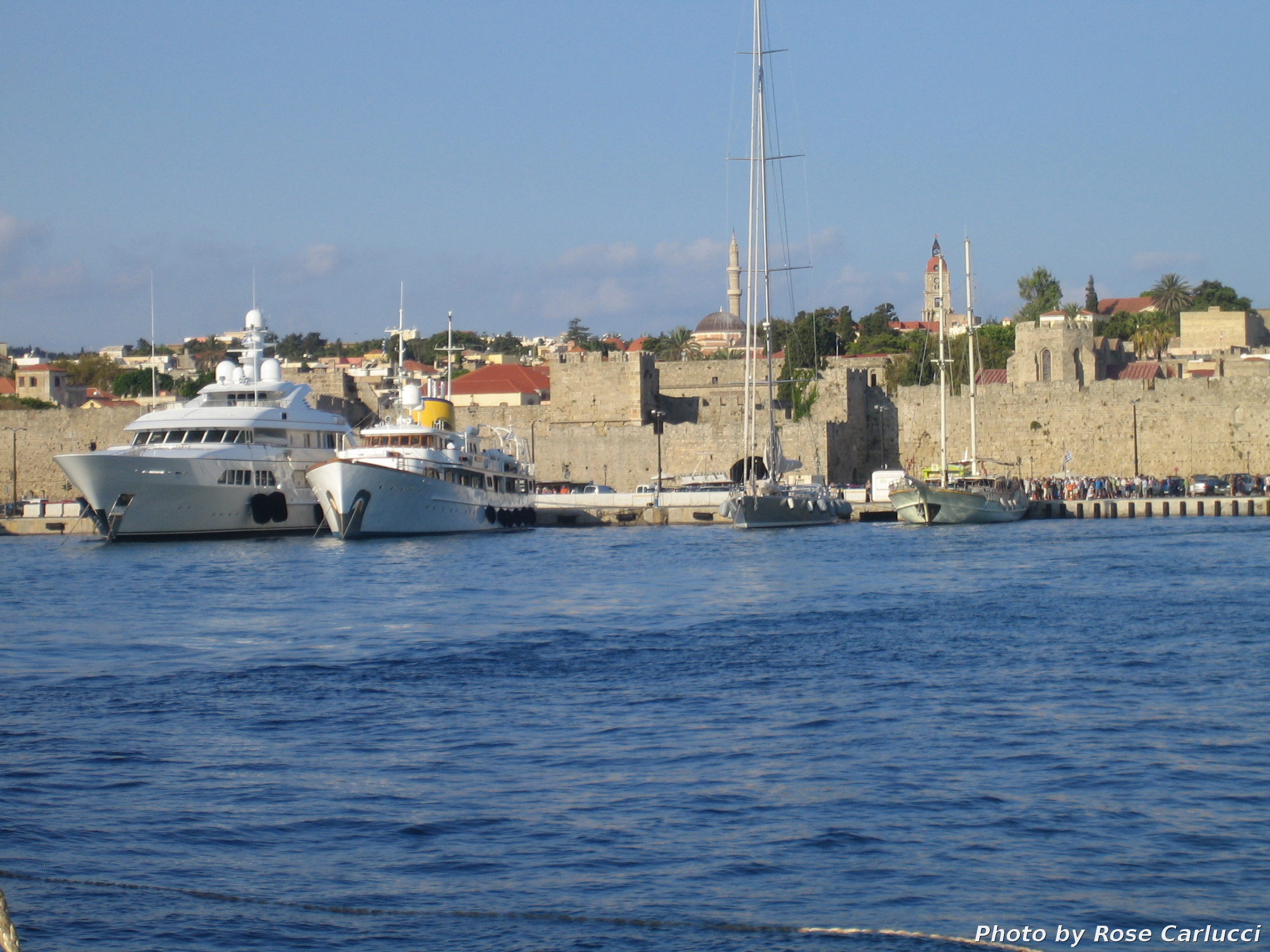
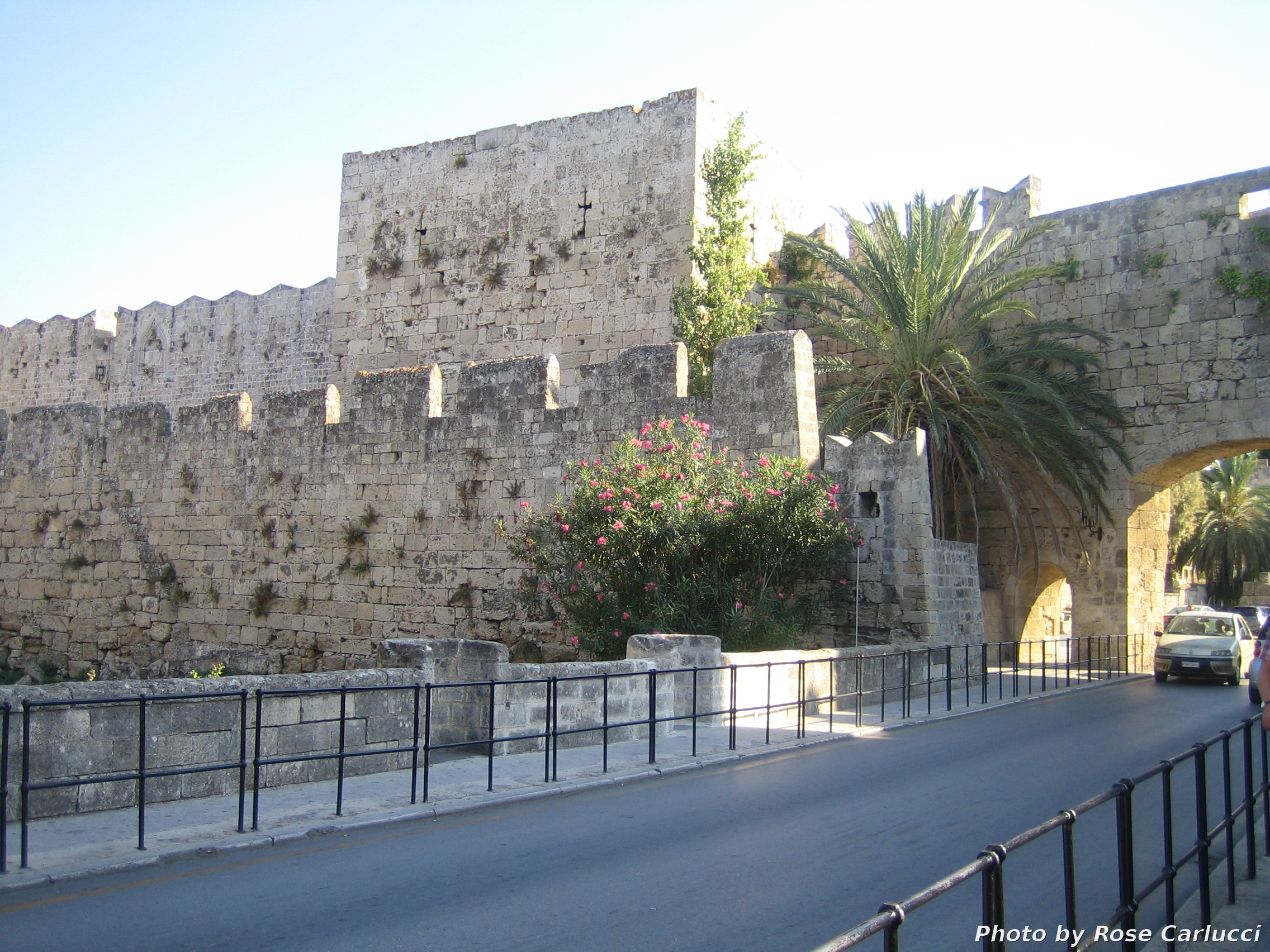
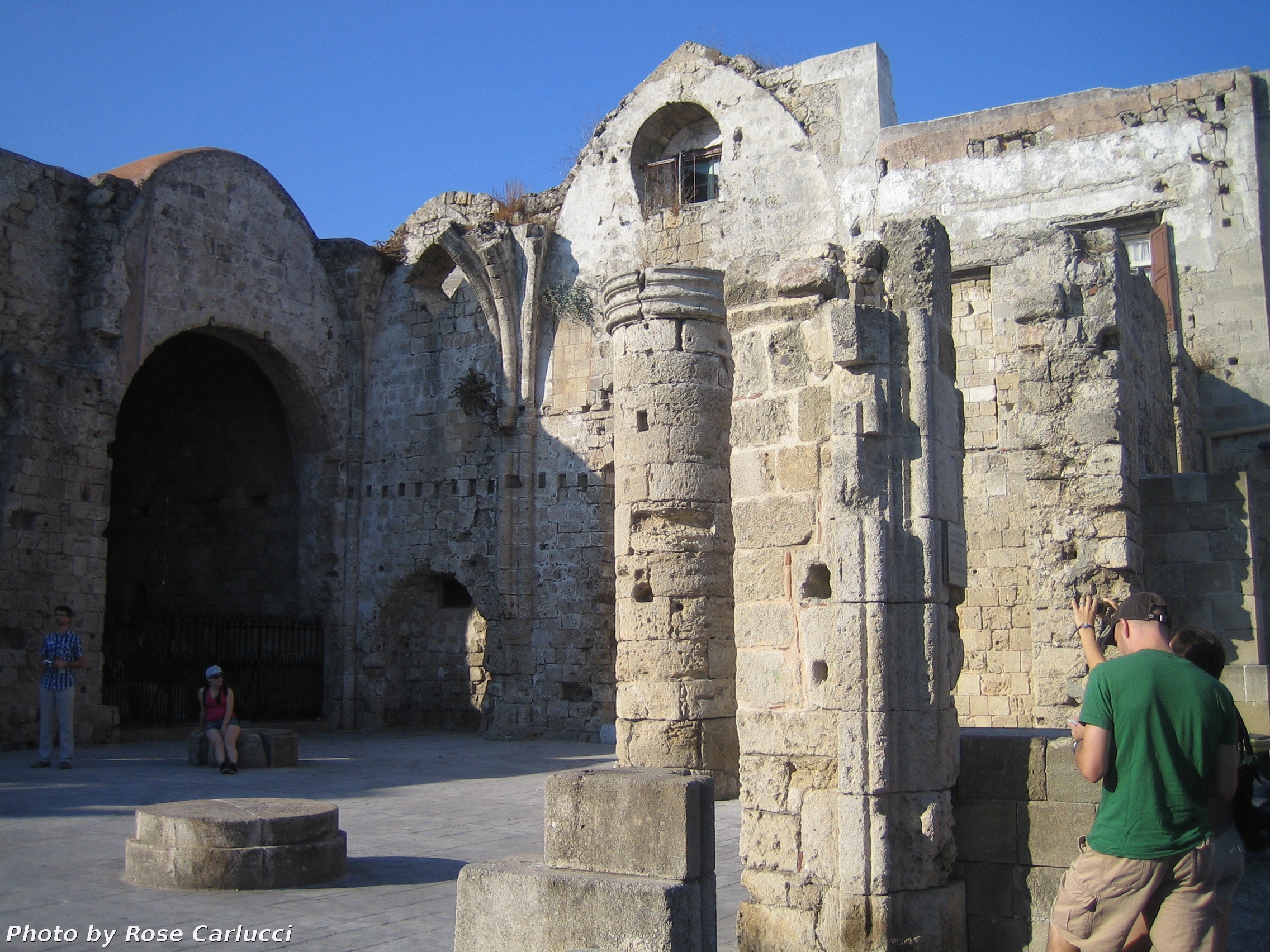
Rhodes is a town located at the north end of the largest island in the Dodecanese archipel which has the same name (Rhodes). It has a very important medieval town with many ruins in an enviable position where were ancient ports and where today are the modern ports. The Colossus of Rhodes, one of the seven wonders of the world, was a gigantic, statue traditionally located at the entrance of the port. It has a beautiful square which is the tourist centre of the city: Hippocrates Square; where you can find several good modern restaurants with terrace balconies at the top; there is a Turkish fountain in the middle of the square. It has beautiful ceramics and a column topped by a bronze owl. Another place to know is Socrates Street, a small narrow street; you can walk from the square towards the mosque of Soliman, it’s a fully-lined shopping street. Bordering Hippocrates square, there is an interesting building of stones with stairs known as Castellania or lodge of merchants. The building continues through a serie of picturesque arcades in Aristotle St. which connects Hippocrates Square with the Archdiocese. Walking through Akandia entry, you’ll find the ruins of Sainte Marie du Bourg (14th century). There are three apses which remain, a few steps from the ramparts, and the court of the older nave. The ramparts of the medieval city of Rhodes stretch over 5 kilometres in length. There are a dozen doors whose most masterful is the door of Amboise. There are two particularly imposing round towers but it opens on a chicane and you still need to cross Saint Antoine’s door to access within the city. The other remarkable door is the Door to the sea or Door of the Port which was the main entry. Two beautiful twin towers crenelated and equipped with machicolations are rather attractive. Above the semicircular arch, a mutilated bas-relief represents a Virgin with the child surrounded by Saint Pierre and Saint John the Baptist. In the place of the Archdiocese there is another fountain with very modern lines with three metal seahorses that celebrate the nearby marine environment. Akandia Port is one of the three ports of Rhodes. The oldest harbour is in front of the ‘Sea door’; here we can see the boats of fishermen. Mandraki, the most famous with the deer and the hind, welcomes boats and day cruise boats. Third, besides the fortifications, the other port welcomes the Giants of cruise and ferry boats from Piraeus. The harbour of Mandraki is protected by a 300 metres long dam on which stand still three antique windmills; at the end of the dam, the Fort of Saint Nicolas defended the city of Rhodes of the first maritime assaults. Inside the fort, there is a lighthouse which guides the boats at night.
Tips
If you only visit Rhodes for a day, the medieval town takes all day long, but if you stay a few days on the island, you’ll be able to visit it at different times of the day. To walk, the morning and the evening are the most enjoyable moments because the sun is very strong and the the temperatures are too hot nearly noon.
You will find many shops with typical handicrafts but you can usually discuss the price and get what you want for a more reasonable price.
If you want to enjoy the sea, not far from the port, you will find beaches to spend some pleasant hours. The most beautiful beaches are farther but for a day visit, it’s worth it to relax a bit in this so nice sea.
The city has plenty of cafes, restaurants, bars where you can also relax a little and enjoy a good coffee or a good local wine.
Wear comfortable shoes and in summer, wear light clothing and especially, drink plenty of water.