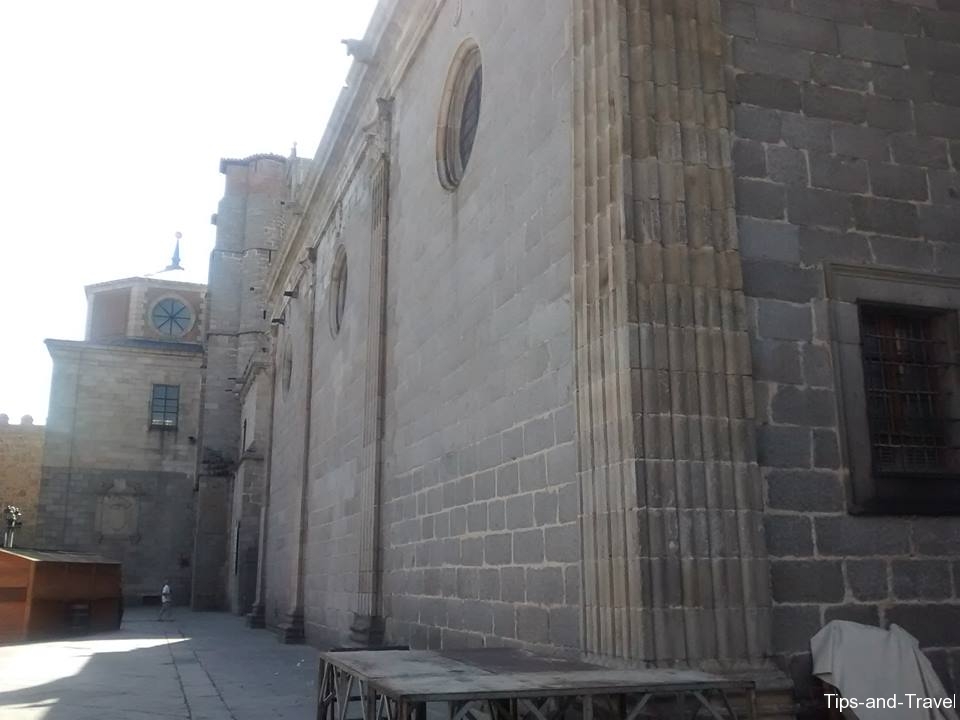
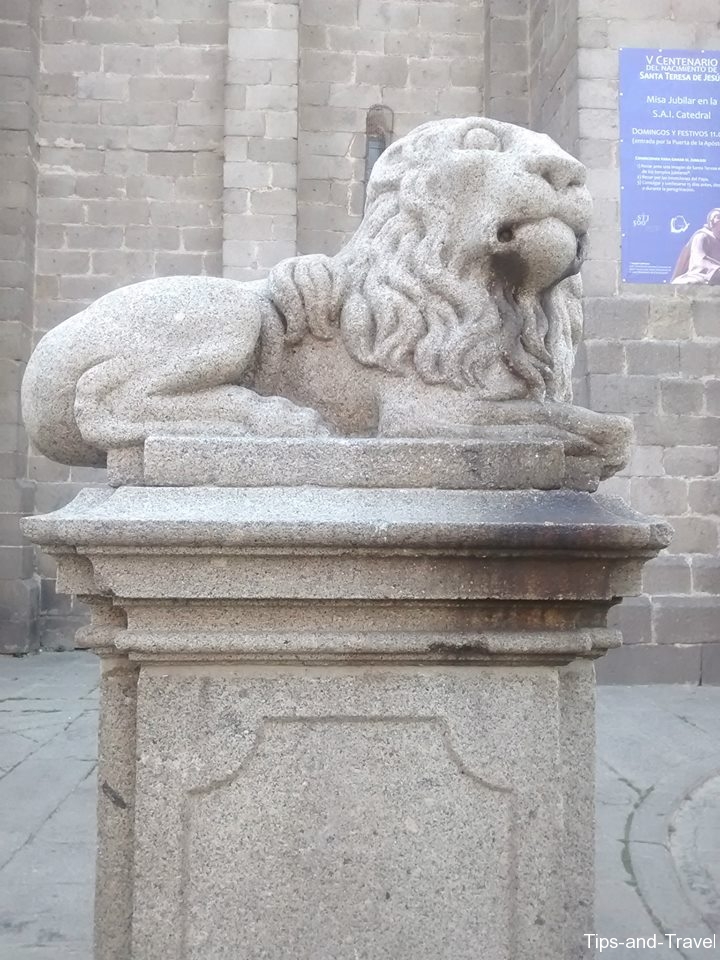
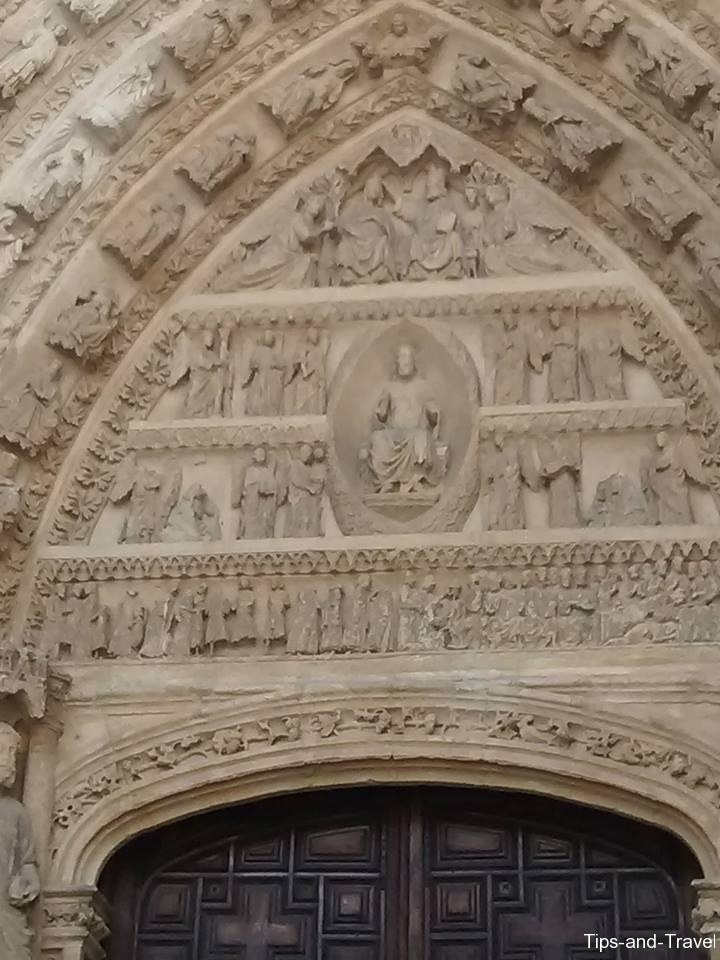
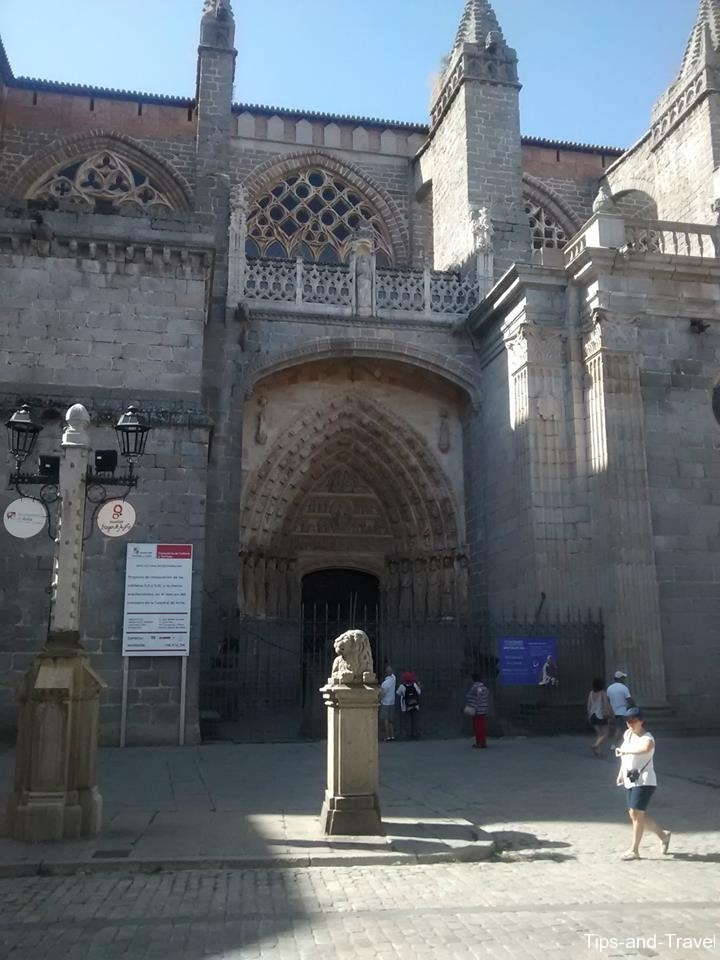
Cathedral of Christ the Savior, Avila, Castilla y León, Spain

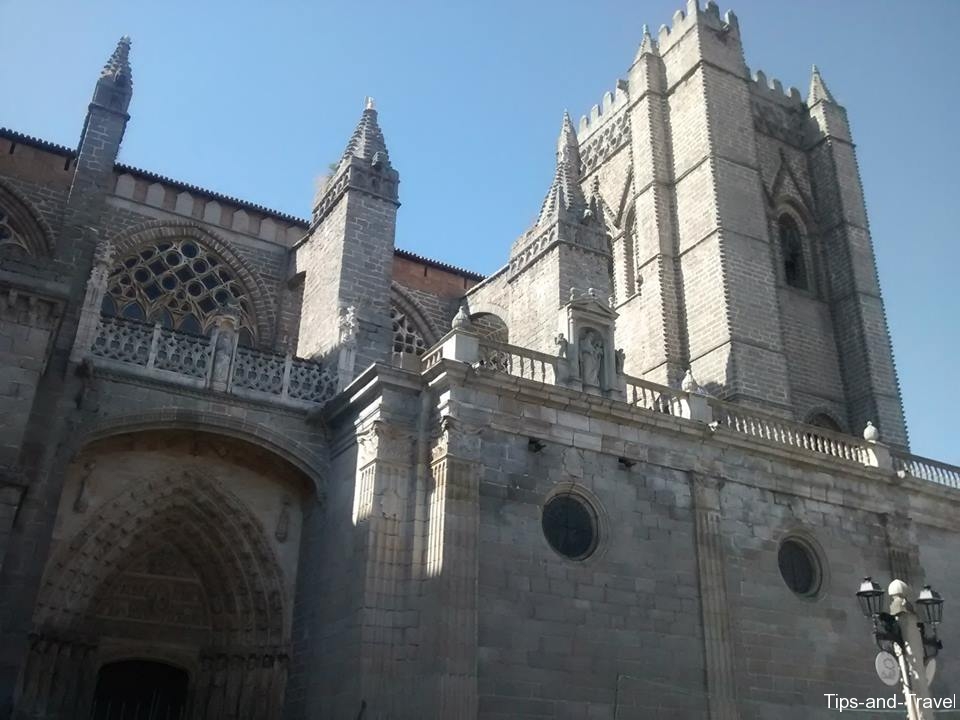
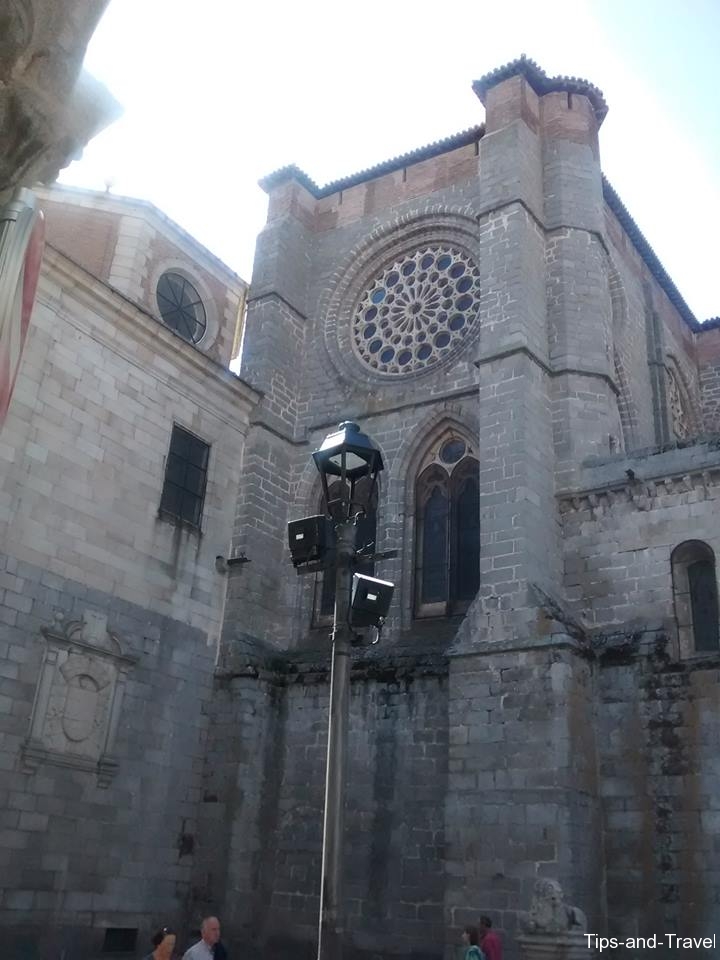
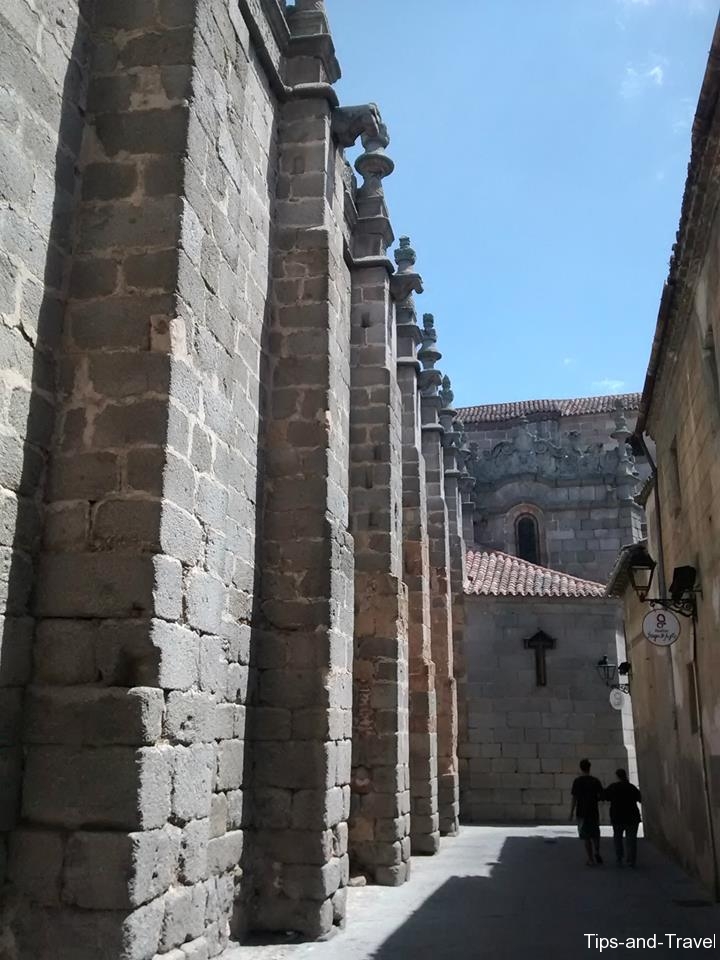
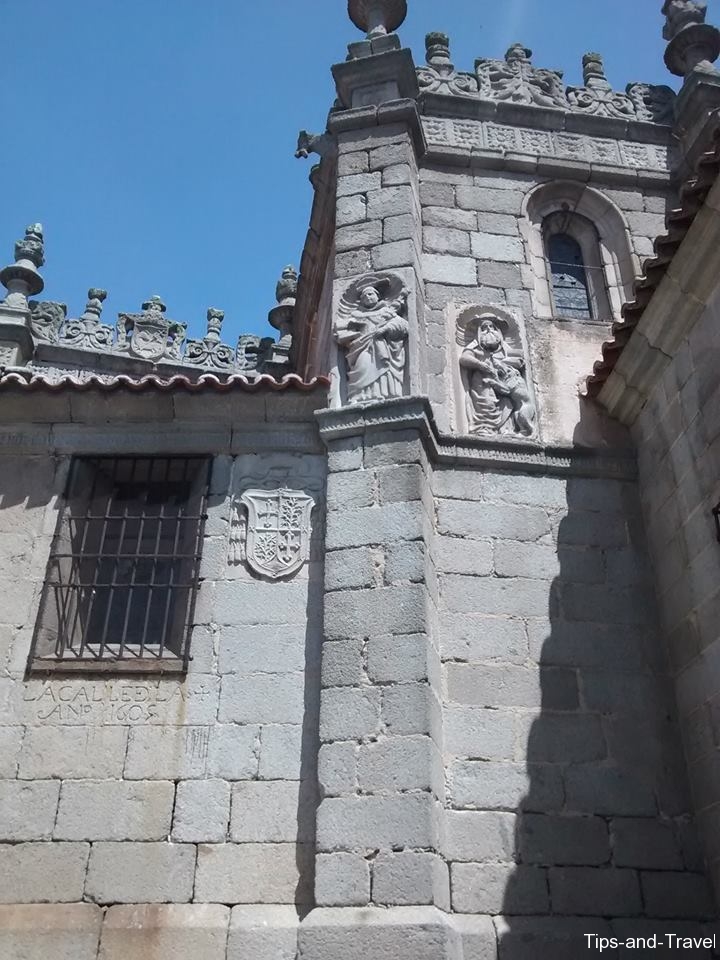
The Cathedral of Christ the Savior in Avila, the first Gothic cathedral in Spain, is the bishopric of the same name, in Castilla y León. It was designed as a temple and fortress, its apse being one of the hubs of the city wall. It is located alongside several houses or majestic palaces which ensured the defense of the Loyal Door or the Weight of the Flour. It is not known with certainty the date on which it was built, but most historians say it was in the twelfth century with the completion in the XVI century, except for a tower that has not been completed. The back of the choir is limestone and it is very large. We find a French influence with a resemblance to the Basilica of Saint-Denis. Outside, it is fortified, but inside its double ambulatory with thin columns and arches give it an impression of lightness and clarity, also with a very good light. The three naves are of equal width, but the central one is significantly higher, and opens with large windows to the outside. There are the remains of the penultimate historian and prime minister of the Second Republic in exile, Claudio Sanchez Albornoz and those of the Spanish President Adolfo Suarez (1977-1981) and his wife.

Tips

The cathedral is open daily, but you should consult the daily schedule.
You have to pay an entrance fee for sightseeing, but children under 12 years old and people with disabilities do not pay.

Blue Mosque, Istanbul, Turkey

The Blue Mosque or Sultanahmet Camii is a historic mosque of Istanbul, known as the Blue Mosque because of ceramic adorning the walls of its interior. It was built between 1609 and 1616, during the reign of Sultan Ahmet 1 who decide to build it to appease God after the unfavorable outcome of the war with Persia. It has the tomb of the founder, a school and a hospice. It is the starting point for caravans of Muslim pilgrims to Mecca, it has six minarets. Its dome 23.5 meters in diameter is supported by four massive pillars and buttressed by four semi-domes; 260 windows flood the light building. The interior is decorated with 21,043 tiles from Iznik in a dominant blue. The prayer hall is topped by an ascending system of domes and semi-domes, each supported by three porticos, culminating with the large central dome which has 43m high at its central point. The decorations include verses from the Koran. The floors are carpeted, with carpets given by the faithful and are regularly replaced when worn. The most important element in the interior is the mihrab made of marble. The yard is about as large as the mosque itself and is surrounded by a continuous, rather monotonous vaulted arcades. The central hexagonal fountain is rather small in contrast to the dimensions of the court. The monumental door, but wide, to the courtyard is characterized by the architecture of the arcade. Until recently the muezzin calling to prayer or had to climb a narrow spiral staircase five times a day to announce the call to prayer. Today a public sound system is used, and the call can be heard through the old part of the city, echoed by other mosques nearby.

Tips

The Sultanahmet Mosque has become one of the most popular tourist attractions of Istanbul. Large crowds of Turks and tourists gather at sunset in the park in front of the mosque to hear the call to evening prayer at sunset and the mosque is brilliantly illuminated by colored spotlights.
The large backyard has sanitary facilities on both sides.

Invalid Displayed Gallery

Sheikh Zayed Mosque, Abu Dhabi, UAE

Sheikh Zayed Mosque has 22 412 m² and can accommodate up to 40,000 visitors, considered the largest mosque in the UAE and one of the largest in the world; located in Abu Dhabi. It is the only mosque that allows the visit of tourists. Its name comes from Sheikh Zayed bin Sultan Al Nahyan who made built the edifice in Carrara marble, with the largest chandelier that weighs around 12 tons and the largest carpet in the world that consists of 9 pieces. He died before the end of the construction and his son Khalifa continued the work and gave his father’s name to the mosque. The construction took 12 years (1995-2007) and several international engineers and craftsmen worked there. It has many columns (1048), arches topped by domes (82) and four minarets of 107 meters in height. The domes are topped spiers covered in gilded mosaic glass. In its interior, it is decorated with floral motifs that have been made by a graphic arts company in Milan, Italy and we also find semi-precious stones of Austria. As it was built on a desert terrain, the structure is based on more than 6,000 steel pillars treated to resist corrosion caused by the salt environment. The land was raised from 9 meters to allow more impressive vision. The tomb of Sultan is located at the entrance, outside the mosque; there are two men who read the Koran all the time. Around the mosque there are 22 laps each provided with ten projectors that link to the mosque.

Tips

To make the visit, women should wear long skirts or pants that cover completely the legs below the ankle, they must have long sleeves and cover all the head; they can wear sandals and the entrance to the mosque is done barefoot so if you prefer you can wear stockings.
Be careful with the marble floor as it is slippery especially if there is water. We have had the experience of a lady who fell by aching ankle and was immediately transported to the medical clinic on site, in wheelchair, where she received care without spending a penny.
You can take pictures everywhere except at the tomb of Sultan.
The visit is free and it can not be visited on Friday morning.

Invalid Displayed Gallery